
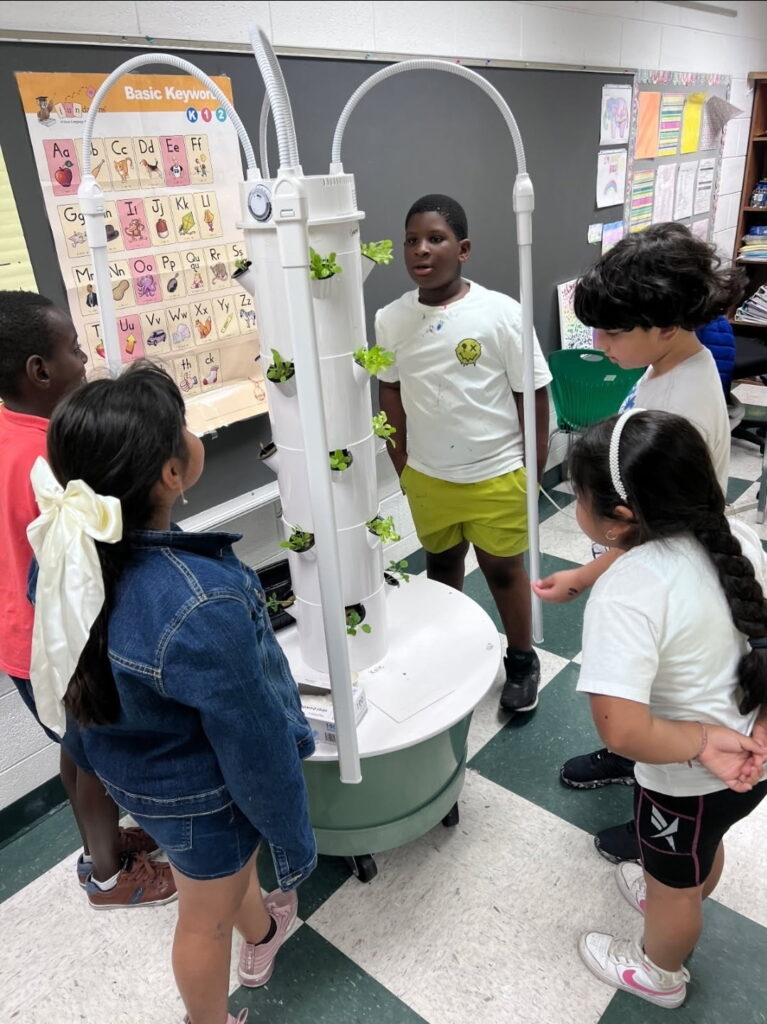
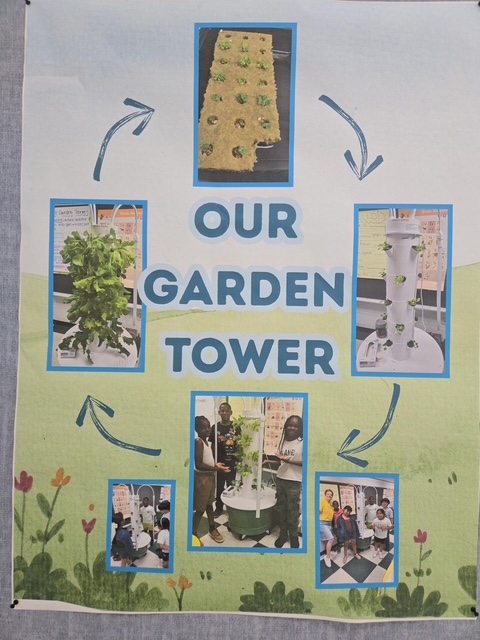
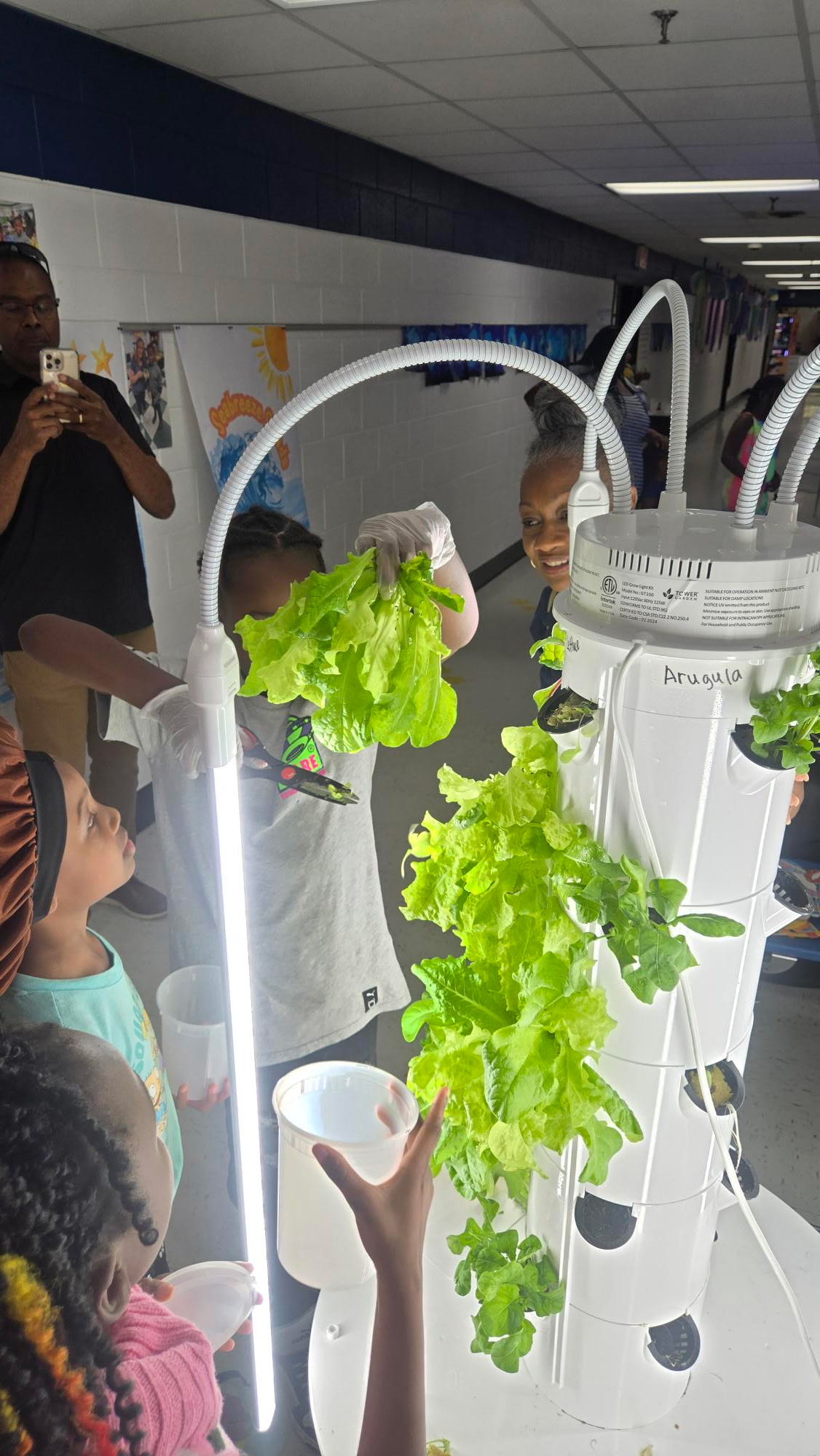
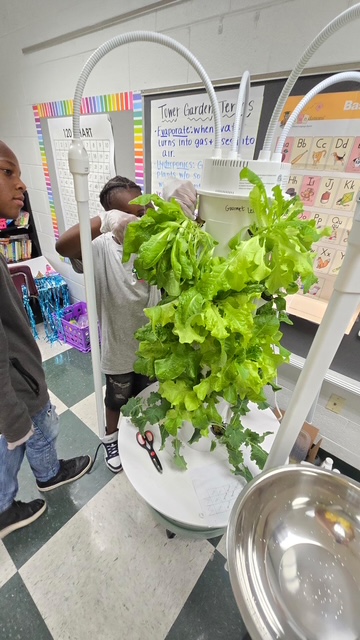
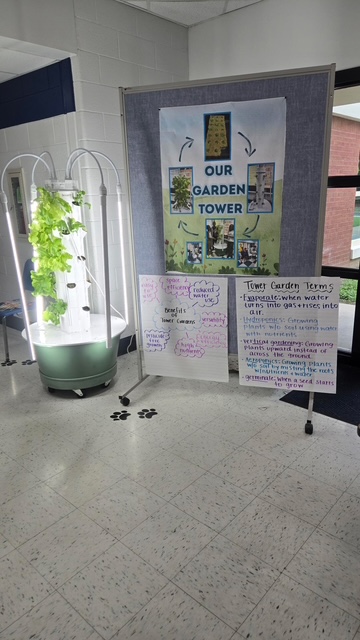
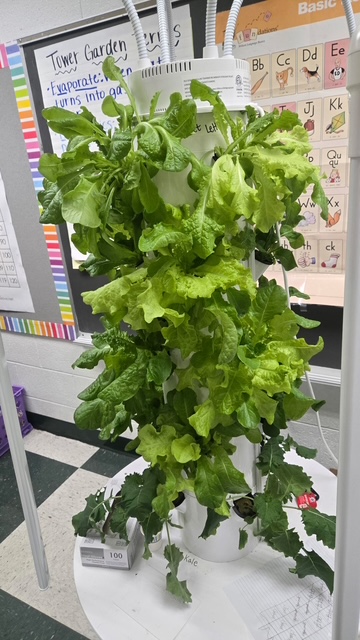
Aeroponic tower gardens are vertical, soil-free growing systems that allow plants to thrive using only water, nutrients, and air. Instead of traditional gardening methods, these towers use a closed-loop system that delivers nutrient-rich water directly to plant roots. They produce a wide variety of crops such as lettuce, herbs, and tomatoes. The hands-on experience of watching plants grow from seed to harvest in an aeroponic system introduces students to sustainable farming practices and emerging agricultural technologies.
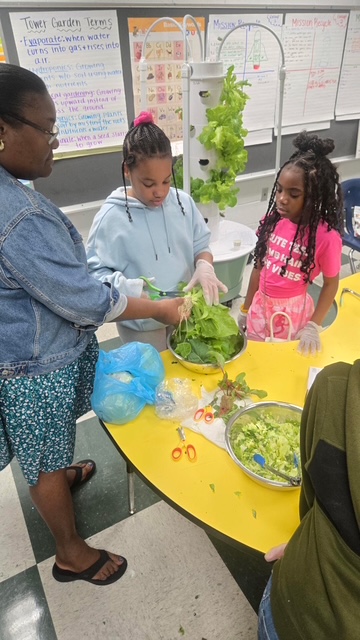
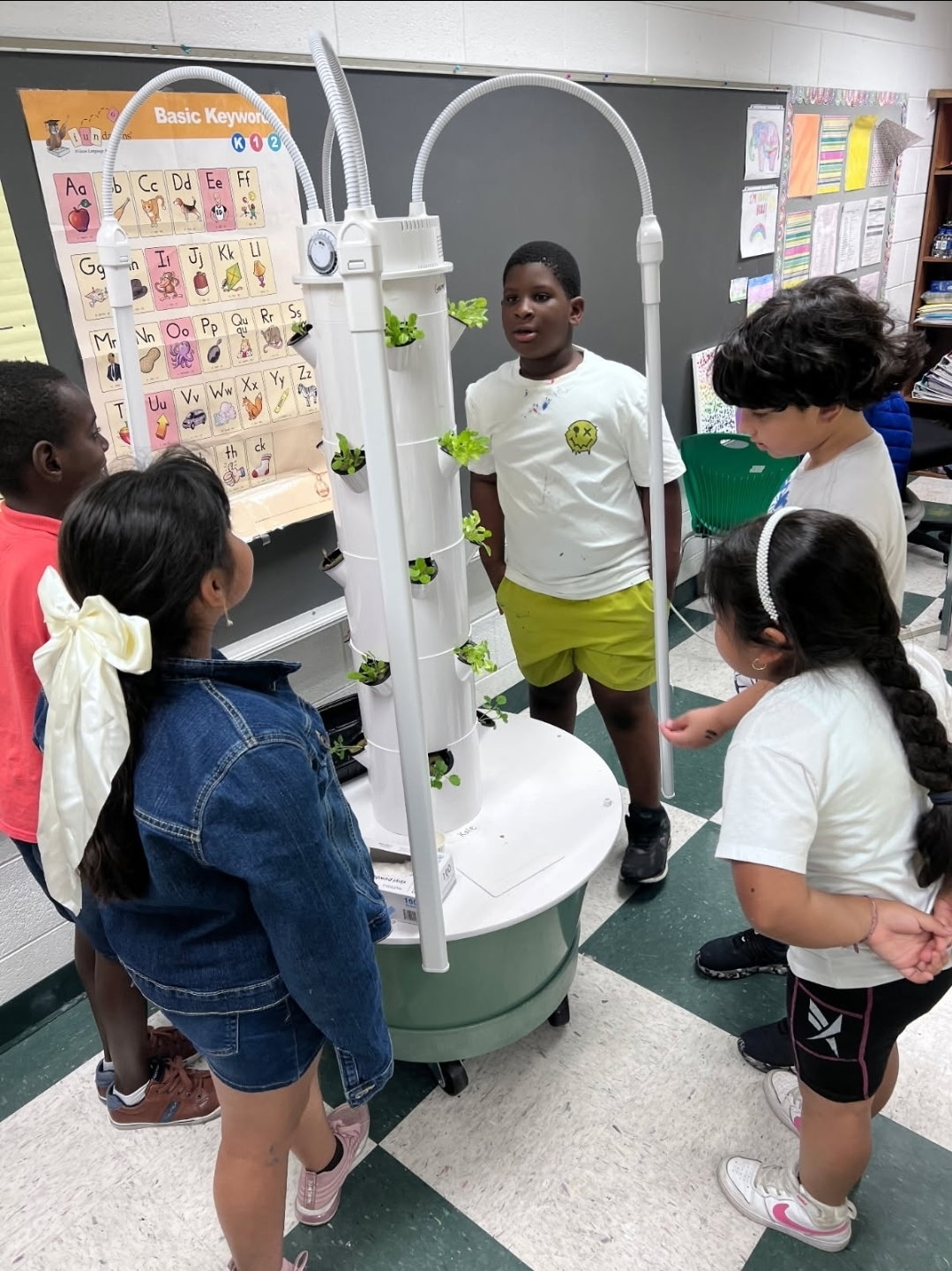
Tower gardens provide students with real-world, inquiry-based learning opportunities. Children can take on the role of gardeners, scientists, and problem-solvers as they plant seeds, monitor growth, and adjust environmental conditions to optimize plant health. Lessons extend beyond science to include math, literacy, and even art, as students record measurements, write reflections, and illustrate their observations. This type of experiential learning helps foster curiosity and critical thinking skills while giving students a sense of ownership and responsibility over their projects.
The use of aeroponic tower gardens connects directly to Virginia’s Standards of Learning (SOL) objectives for grades K-6. For example, in science, students meet life processes objectives by investigating plant structures, needs, and life cycles (SOL 1.4, 2.4, 4.4). Math standards are supported through measuring plant growth, analyzing data, and applying concepts of addition, subtraction, multiplication, and division to calculate averages and rates of growth (SOL 2.1, 3.4, 5.6). Language arts objectives are integrated when students write journals, create presentations, and read informational texts related to agriculture and sustainability (SOL K.11, 3.9, 6.6). Additionally, social studies standards are reinforced as students explore community food systems and the importance of environmental stewardship.
The benefits of aeroponic tower gardens extend well beyond meeting academic standards. They provide fresh produce for tasting activities, encouraging students to make healthy food choices and better understand nutrition. They also nurture environmental awareness by teaching sustainable practices, such as water conservation and local food production. Classroom gardens create a natural connection between students and the food they eat, promoting lifelong habits of curiosity, responsibility, and care for the environment.
Finally, aeroponic tower gardens foster collaboration, teamwork, and problem-solving skills. Students work together to plan planting schedules, share responsibilities for maintenance, and troubleshoot issues such as water flow or nutrient balance. These activities support social-emotional learning by encouraging communication, patience, and resilience. Overall, aeroponic tower gardens are powerful teaching tools that enrich learning across subject areas while equipping students with the knowledge and skills needed for a sustainable future.

Get Involved
Want to help students access more resources? Here’s how you can get involved!